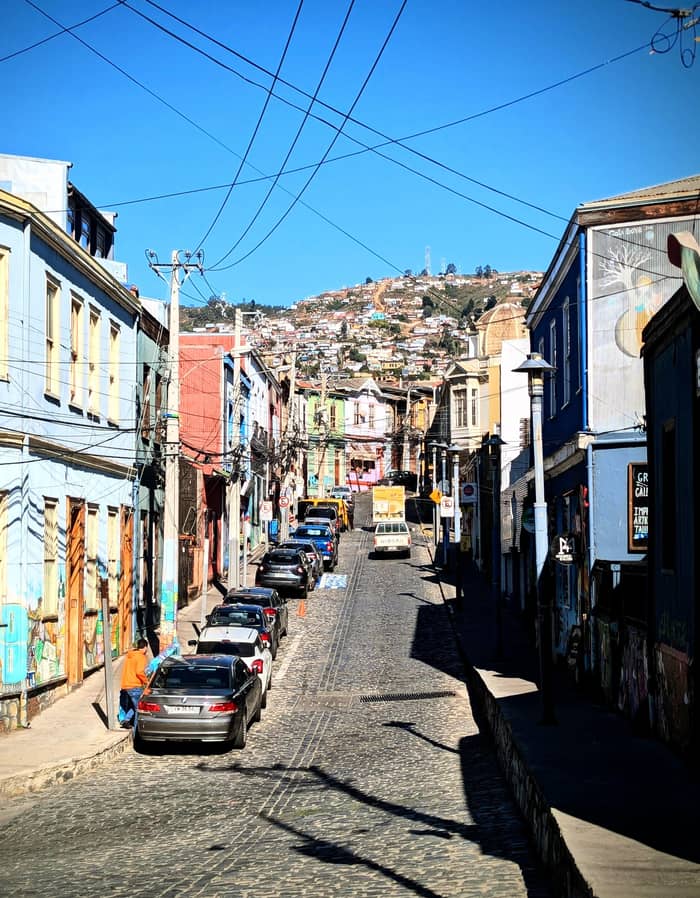
Heritage
Concepción
The original
- Lower endCalle Prat
- TopPaseo Gervasoni
- RideAbout a minute
Choosing helper
Valparaiso Tour: Street Art, Funiculars & Port (6 pax)
★ 4.8 · 243 guest ratings
Two questions, one way up
Say how you like to explore and how much of the coast you want, and an outing appears with its starting price.
Your top pick
from $46
2 hours from the cannons on Muelle Prat, riding El Peral and Concepción.
Your top pick
from $40
3 hours with a lift ride and the open sky gallery, small group of up to 10.
Your top pick
from $23
2.5 hours on foot with a guide in English and Spanish.
Your top pick
from $39
10 hours with pickup, Valparaíso, Viña del Mar, Reñaca and Concón.
Your top pick
from $290
9 hours for your group alone, pickup included; priced per group.
A Valparaiso ascensores tour is a fine way to understand a city built on hills: little wooden cars, steep rails and a view that opens as you rise. Here is which lifts run, what they cost and how to link them.
Editorial team, valparaisotour.com · Updated November 11, 2026 · ~7 min read
Facts at a glance
Valparaíso grew rich on shipping before anyone dug a canal across Panama, and that trade turned it into a great center of commerce in the 19th century.6 The flat strip by the water filled quickly, so people built their houses up the hills that ring the bay.7 Climbing those slopes every day on foot was hard work, and the answer the city found still runs on rails today.
Lift building began in 1880, as the port expanded at speed.8 At its peak the city had 31 of these inclined railways.9 Most lifts are a pair of small cars on a slope, one rising while the other falls, linked by a cable over a wheel in the machine room at the top.
They are not museum pieces kept for visitors. The tourism board stresses that the lifts are still part of the urban transport used daily by residents, which is why you share the car with shopping bags and school uniforms.10 An urban tour of Valparaiso by funicular therefore shows you the postcard view from the top and, at the same time, the working city that still needs a lift to get home.
Lift by lift
| Funicular | Opened | Lower station | Top station |
|---|---|---|---|
| Concepción | 18831 | Calle Prat | Paseo Gervasoni19 |
| El Peral | 190115 | Plaza de Justicia | Paseo Yugoslavo16 |
| Reina Victoria | 190323 | Calle Elías | Paseo Dimalow27 |
| Cordillera | 188612 | Calle Serrano | Plazuela Eleuterio Ramírez32 |
| San Agustín | 191333 | Calle Serrano | Calle Canal34 |
| Espíritu Santo | 191135 | Calle Aldunate | Calle Rudolph36 |
| Barón | 190917 | Avenida España | Avenida Portales37 |
Opening years and stations from the municipal tourism guide; Artillería and Polanco are left out because the guide lists them as temporarily closed.4,5
Start with Concepción, the first lift to run in the city, opened on 1 December 1883.1 It first ran on steam with wooden cabins and now runs on electricity with metal cars.11 The ride is 69 m long at a slope of 43 degrees and takes 60 seconds, from Calle Prat up to Paseo Gervasoni.18,19 The municipal guide lists it from 07:00 to 21:30.20
El Peral came next door in 1901.15 Its 55 m ride runs at 48 degrees and takes 45 seconds, from Plaza de Justicia, beside Plaza Sotomayor, to Paseo Yugoslavo and the fine arts palace.21,16 The foreign merchant families who settled on Cerro Alegre used it heavily, and it is still a favourite first ride into the hills for visitors.22
Reina Victoria opened in 1903 and was named for the British queen who had died in 1901.23,24 Its cars once moved by counterweight, each with a water tank underneath that was filled to outweigh the other car.25 At 52 degrees it is the second steepest in the city, a 40 m ride from Calle Elías up to Paseo Dimalow and its wooden footbridge.26,27
West of Plaza Sotomayor, the Cordillera lift opened in 1886 as a steam lift and is the second oldest in the city.12 Fire destroyed the original, and the car you ride today is a replica built in 1894.13 It is a 60 m ride with a painted staircase beside it, so you can climb by rail and come back down on foot.31 Its lower station sits on Calle Serrano in the old port quarter.32
Close by on Cerro Cordillera, San Agustín opened in 1913 and is the only lift from which you cannot see the sea, because it climbs the side of a ravine.33,40 The tourism board routes walkers down it from Cerro Cordillera towards Mercado Puerto, a good finish for a morning in the port quarter.41 It feels more like a neighborhood shortcut than an attraction, which is exactly its charm.
On the other side of the center, Espíritu Santo opened on Cerro Bellavista in 1911, and its top exit leads straight to the Open Sky Museum of murals.35,36 Further east, Barón opened in 1909 and was the first lift with an electric motor, a German machine that still works.17 The tourism board puts Barón about 25 to 30 minutes by bus from the port quarter.42
Pick your ride
Heritage
The original
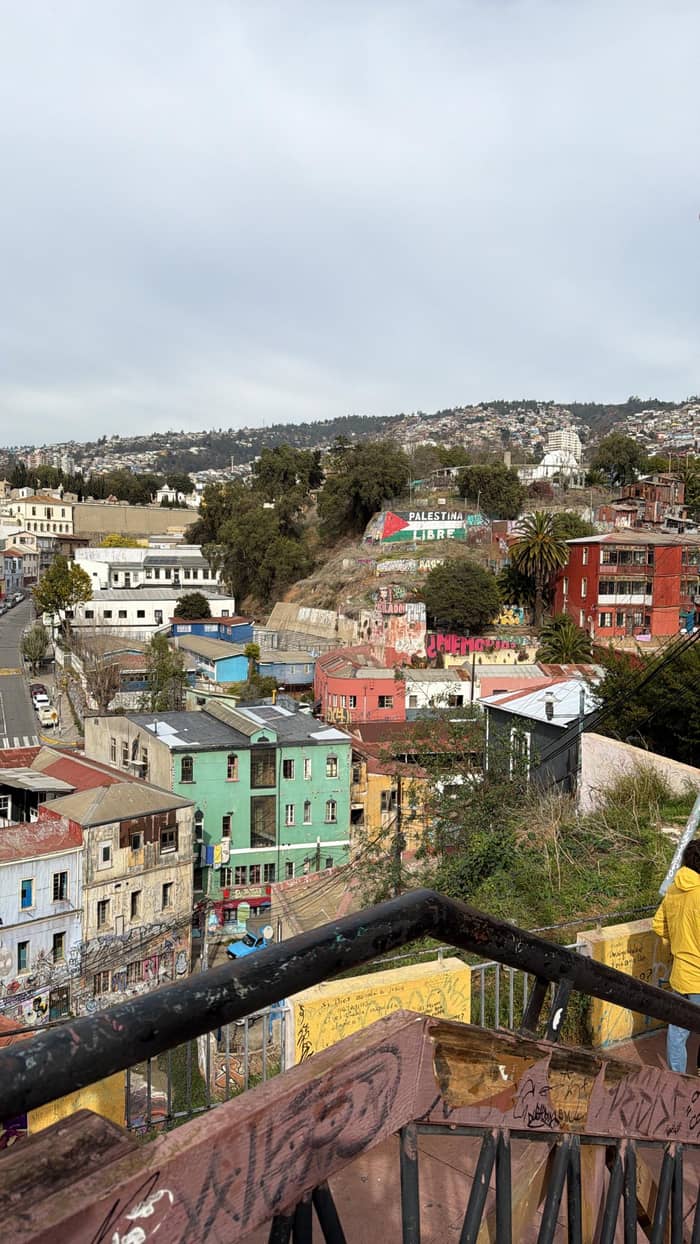
Street art
The steep one
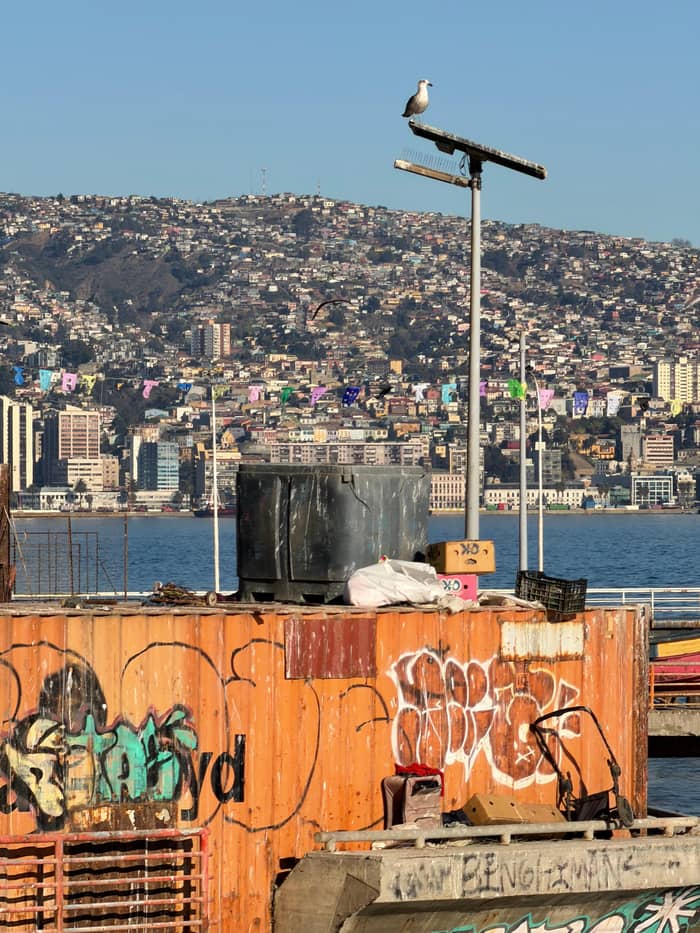
Museum
The classic first ride
Artillería was inaugurated on 29 December 1892 but only began running a year later, for lack of water to drive its machinery.14 Its 175 m ride is the second longest in the city, and its 80 m rise and 2 minutes of travel are the largest of any lift.29,73 The tourism board calls it the most panoramic of all, but the municipal guide lists it as temporarily closed.74,4
Polanco is the oddity of the network: it opened in 1916 and is the only lift that rises vertically, like a building elevator.75 You reach it through a tunnel 150 m long, and the top connects to the neighborhood by a bridge 48 m long.76,77 In 1976 it became the first lift declared a Historic Monument.78 The city's page also lists it as temporarily closed, so check before you plan around it.5
Several others wait for repairs. Mariposas, at 177 m the longest lift in the city, entered restoration in 2018 and is not running.28,79 Monjas stopped in 2009 for low profitability, a fire burned Lecheros in 2007, and Larraín stopped in 2010.80,81,82 Status changes as works finish, so treat any list of open lifts as a snapshot and ask at the station.
Ride with a guide
Compare guided walks that ride the lifts.
Compare 3 alternatives
Compare guided walks that ride the lifts.
≈
View≈
View≈
ViewAll amounts are from-prices on GetYourGuide, converted at the ECB reference rate. Exact prices are shown at booking.
Rails up the hills
1883
1886
A steam lift for the port quarter, rebuilt after a fire.12,13
1892
Water shortages delay its first run by a year.14
1901
1909
A German electric motor arrives, still working today.17
1998
Sixteen lifts become Historic Monuments.3
The tourism board gives the fare for foreign visitors as CLP 1,000 per ride.2 The municipal page for the Concepción lift prints a price of CLP 300 and names no separate rate for visitors, so check the board at the station.20 Either way, a morning of rides costs very little next to anything else in the day.
Bring coins and small notes. The tourism board warns that many lifts do not take cards, and asks riders to follow the staff at each station and to carry cash for tickets.71,72 Pay at the small booth at the bottom or top, wait behind the gate, and let people with heavy shopping go first: for them this is the bus.
Hours are long. The municipal guide gives Reina Victoria and El Peral from 07:00 to 22:00, Espíritu Santo the same, and Barón from 07:00 to 22:00 every day.83,84,85,86 Early morning is the quietest time to ride, with soft light on the bay, while late afternoon brings queues at the famous lifts but a warm glow on the painted houses.
Video
tassiebaz on YouTube · Video data is requested only when you tap play.
Valparaíso’s elevators are part of the urban transport system used daily by its inhabitants.
Before you ride
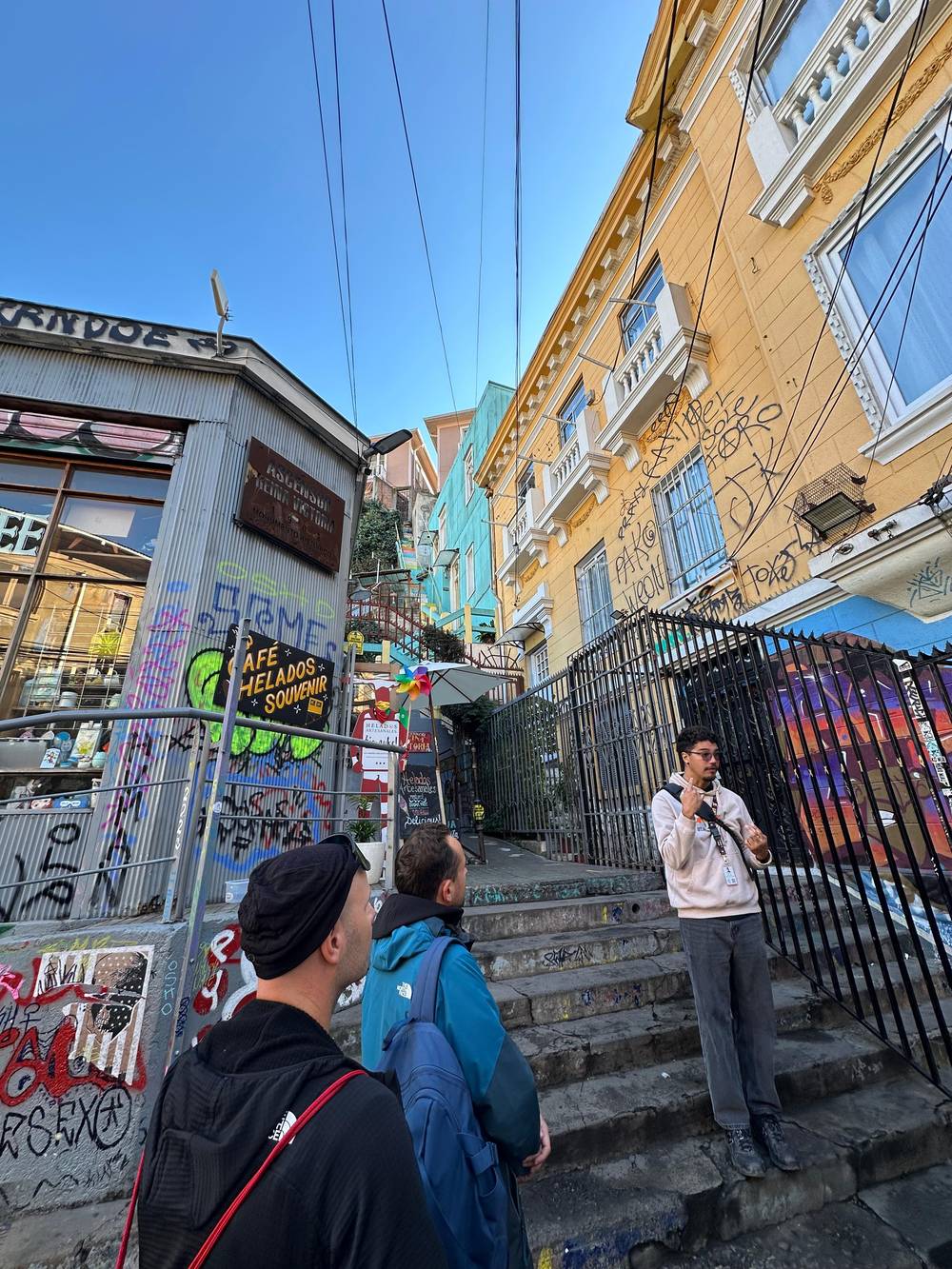
For the history behind each station, a guided walk links the lifts with the streets between them. A well-reviewed street art and funicular walk lasts 2 hours, meets at the cannons on Muelle Prat and rides El Peral and Concepción on its way past Paseo Atkinson and the Piano stairs, from $46.
A tour of the hills of Valparaiso can also be the coast day from Santiago, where the climb is one part of a longer outing. That day lasts 10 hours with pickup and a guide in Spanish, English and Portuguese, from $39. It suits travelers who are based in the capital and want the lifts, the hills and Viña del Mar without planning buses.
On your own, the lifts are easy to string together. Ride El Peral up, cross Cerro Alegre and Cerro Concepción on foot, and come down by Concepción or Reina Victoria. You will cover the core of the heritage hills, see the main viewpoints and spend only a few coins, though you will miss the history a guide adds at each top station.
In 1998, 16 of the lifts were declared Historic Monuments together.3 Polanco already had that status from 1976, the first of them all.78 Several were bought and restored by public bodies in the following years, which is why some cars now look freshly painted and others still wait their turn.
The lifts are also part of the wider heritage story of the port, which UNESCO named a World Heritage Site in 2003.87 They were built in the same decades as the merchant houses on the hills, when British and German settlers arrived in large numbers, more than 20,000 at the port in the later decades of the 19th century.88
That is the real reason to ride them. A funicular here is the thread that ties the flat business district to the homes above it, and every top station opens onto a different neighborhood. Treat each ride as a doorway, step out, walk a few blocks and look back at the bay, and you will understand the city better than any single viewpoint can show you.
FAQ
The Concepción lift opened on 1 December 1883 and was the first to run in the city; it climbs from Calle Prat to Paseo Gervasoni.1
The tourism board warns that many funiculars do not accept cards, so carry coins and small notes.71
The municipal tourism guide marks Artillería as temporarily closed; check its status on the day before you plan the Paseo 21 de Mayo view around it.4
Sources
Also worth reading
A day on the coast from Santiago? Ask a real person.